The problem
Meals on Wheels and More takes hot food to people who cannot easily leave home. I volunteer there, which is how I came to the problem: not as a brief from a client, but from watching the same thing happen every week.
The list changes every day — who is scheduled, how many meals they get, which door to knock on, what they are able to eat. Planned by hand, that becomes a pile of paper and a set of routes only one person really understands. It does not scale, it does not survive that person being away, and it quietly spends driver time that could have gone to more clients.
So I proposed a piece of software and built it. Everything below is a response to something I had actually watched go wrong.
What it does
Management adds each client once — address, unit, buzzer, how many meals, and which days of the week they are on. Alongside that sit the two kinds of note that actually matter on a delivery: how to get in, and what the person can eat. Buzzer sticks, try twice. Side door off the driveway. Low salt. No pork.
Then you choose a date and how many drivers are out, and it builds the routes. Every route leaves from the office and returns to it. Each one reports its stops, its meals, the driving distance and the time on the road, so a coordinator can see at a glance whether the day is balanced or whether one driver has quietly been handed three hours.
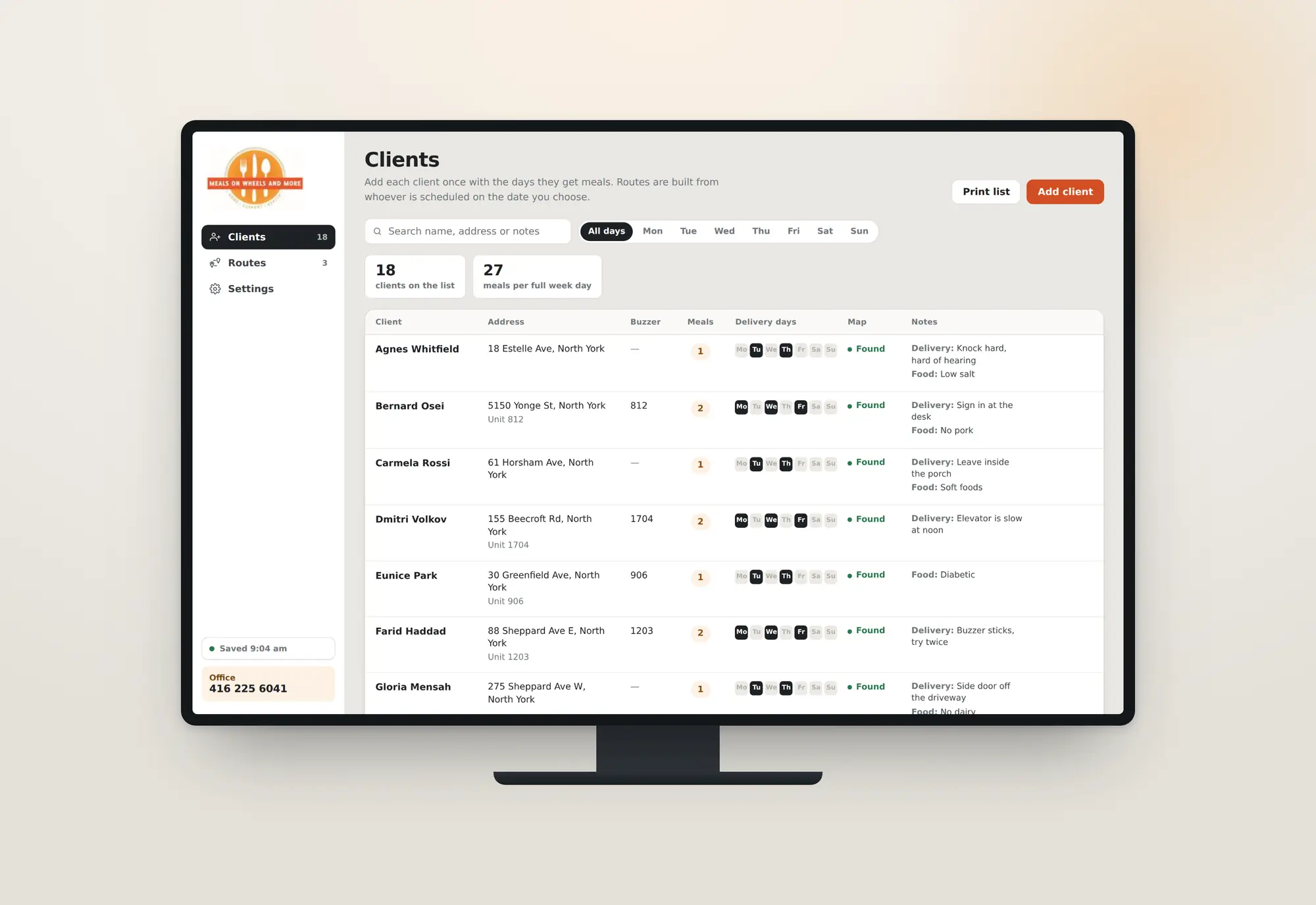
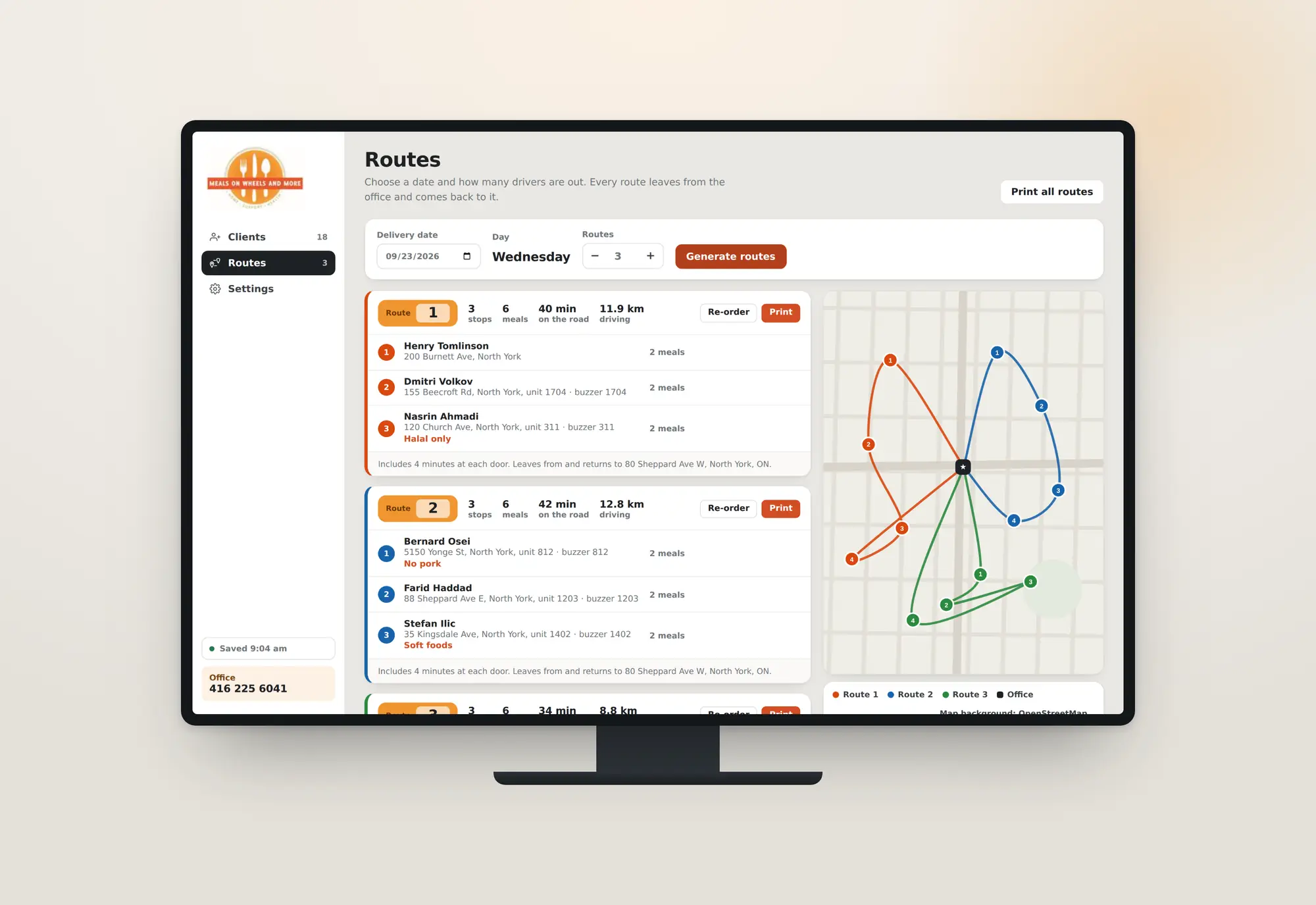
“Choose a date and how many drivers are out. Every route leaves from the office and comes back to it.”
Design decisions
Two things shaped the interface. The first is that it gets used under time pressure by people who are not software people, so the screen explains itself in plain sentences instead of jargon. Every control says what it will do before you press it, and there are no settings buried where nobody will find them.
The second is that the real output is paper. Drivers take a printed sheet into the van, so printing is not an afterthought bolted on at the end — route sheets and client lists are laid out to print cleanly, and the office number sits on every page, because the one thing a driver needs when something goes wrong is someone to call.
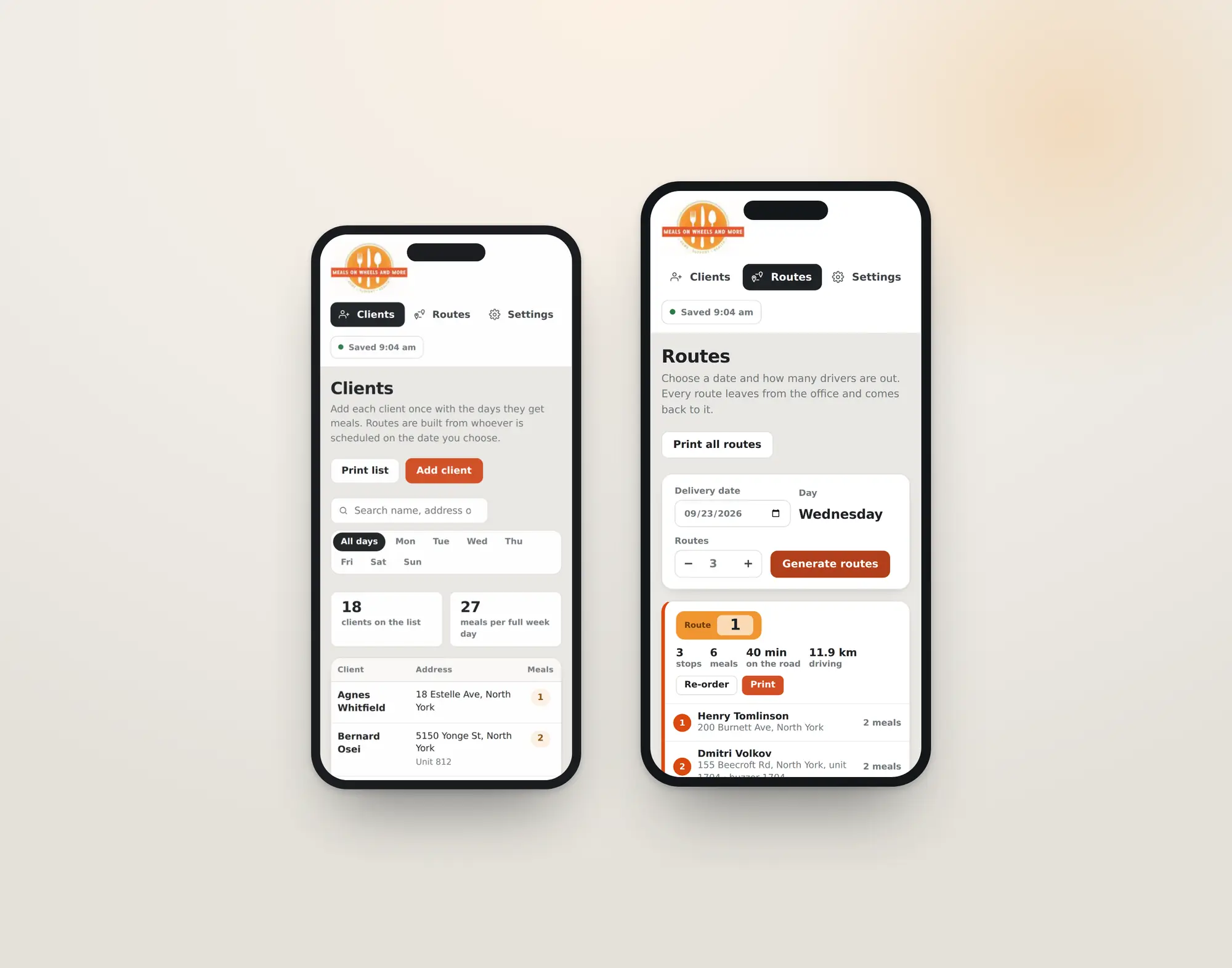
The whole thing is responsive rather than desktop-only, saves as you type, and is searchable by name, address or note — so the coordinator in the office and the volunteer in the van are looking at the same tool.
Outcome
Route planning off paper. A coordinator picks a date, sets how many drivers are out, and gets balanced, printable routes in seconds — with the delivery and dietary notes each driver needs already on the sheet.